Study Spanish in Granada
The charm of Granada
Granada is a city that is easy to fall in love with. With around 240,000 inhabitants, it is home to the historic University of Granada and more than 55,000 students, giving the city a lively, international and youthful atmosphere. Cafés, tapas bars, restaurants, terraces and pubs can be found throughout the city, making Granada a great place to experience everyday Spanish life.
But Granada’s charm goes far beyond its student atmosphere. Its unique combination of history, culture, traditional Spanish life and spectacular landscapes makes it a special place to live and study Spanish. The Alhambra, the Albaicín and Sacromonte, the Sierra Nevada and the nearby Mediterranean coast are all part of its appeal.
Many students come to Granada to learn Spanish and discover the city, but leave with memories, friendships and a desire to come back. Granada is one of those cities that stays with you long after you have left.
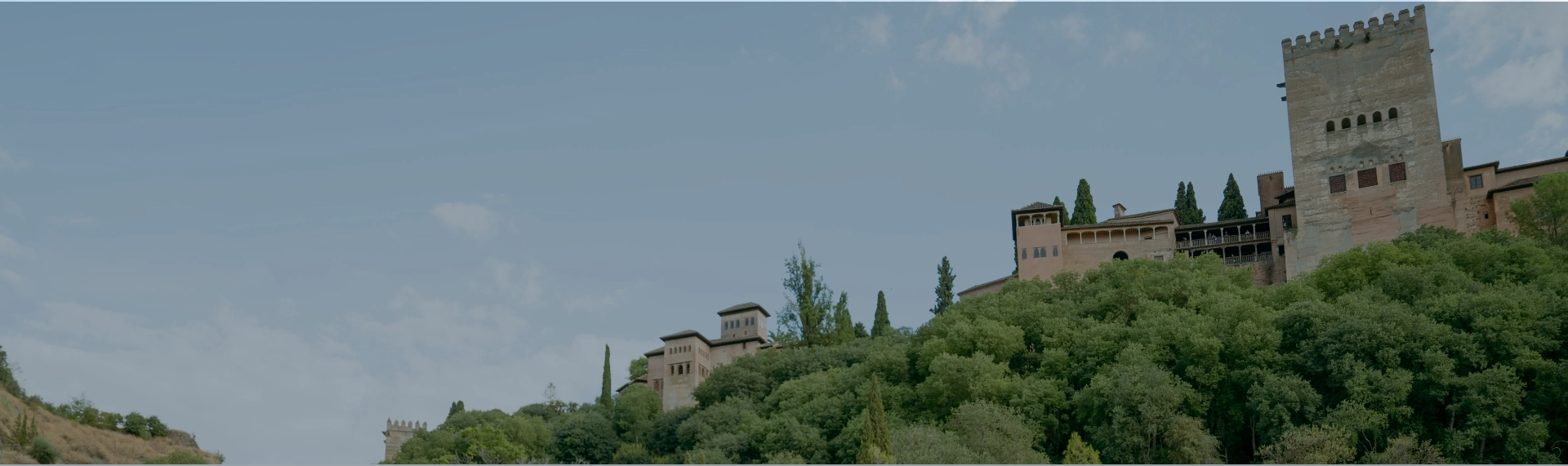
Plaza Nueva, at less than 5 minutes walking from Delengua, is surrounded by historic streets and traditional Arab shops. Granada has played an important role in some of the most fascinating chapters of Spanish history. Centuries of Arab influence shaped the city’s culture and architecture, leaving behind the Alhambra and Generalife, one of the world’s most remarkable monuments.
The Renaissance also left its mark on Granada, with landmarks such as the Cathedral, the Royal Chapel, where the Catholic Monarchs are buried, La Cartuja, the Monastery of San Jerónimo and numerous churches and palaces.
The Albaicín, Granada’s oldest neighbourhood and a UNESCO World Heritage Site, stretches across the hillside opposite the Alhambra. Its narrow, cobbled streets lead to small squares, traditional white houses, hidden gardens, fountains and some of the city’s most beautiful views of the Alhambra.
Explore the Sacromonte, famous for its cave houses and flamenco tradition, discover the historic Realejo and the Alcaicería, the old Arab bazaar, or enjoy the lively atmosphere of Plaza Nueva and the terraces along the Paseo de los Tristes.
Granada’s location makes it an ideal base for exploring both the mountains and the Mediterranean coast. From the city, you can admire the snow-covered peaks of the Sierra Nevada and enjoy hiking, skiing and other outdoor activities. The Alpujarras offer beautiful mountain landscapes and traditional villages, while Guadix is known for its distinctive cave houses.
You can also explore other Andalusian cities such as Málaga and Seville, or spend a day on the beaches of the Costa Tropical. Few places offer such a variety of landscapes and experiences within such a short distance.
Study Spanish
in the centre of Granada
Escuela Delengua is located in the heart of Granada, next to Plaza Nueva, just a short walk from Granada Cathedral and at the foot of the Albaicín. Our central location makes it easy for students to explore the historic centre, discover local cafés, tapas bars and shops, and experience everyday life in Granada while studying Spanish.
Average Prices in Granada
Here is a guide to average prices in Granada to help you plan your budget while studying Spanish in the city. Please bear in mind that these are approximate prices and may vary depending on the area, establishment and time of year.
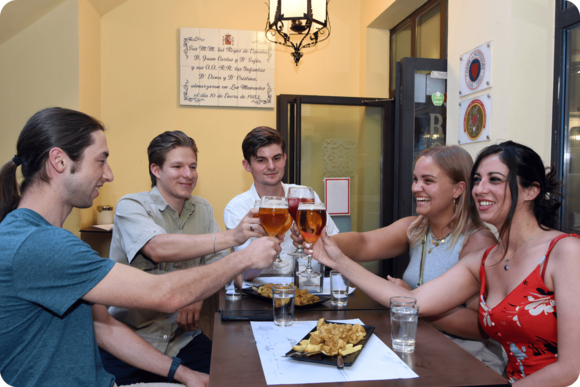
- Beer in a bar (+free tapas): 2,20 € – 3,50 €
- Entrance to a club (normally includes a free drink): 8,00 € – 12,00 €
- A glass of wine in a bar: 3,00 € – 5,00 €
- Ticket for the cinema: 5,00 € – 9,00 € (Wednesday: 4,50 €)
- Ticket for the bus: 1,60 € (Travelcards with discounts available)
- Bottle of wine (1 litre): 3,00 € – 8,00 €
- A bottle of beer (one litre): 1,90 €
- A bottle of water (two litres): 0,40 €
- A baguette: 1 €
- A carton of milk: 1 €
- A cup of coffee/tea: 2 €
- A piece of toast: 1,50 €
- Ice-cream: 3,00 € – 5,00 €
- A sandwich: 3,50 € – 5,00 €
- Spanish Menu of the Day (3 course meal): 11,00 € – 15,00 €

Join Granada for the Celebrations...
Scroll down to see all the Fiestas that you can enjoy in Granada.
The 1st January: New year’s Day
The 2nd of January: Catholic conquest
People from Granada celebrate the capture of the city by the Catholic Kings. The youngest councillor holds the standard of Castile and greets the people from the balcony of the Consistorio. A civic procession also takes place in the city, during which the standard of the Catholic Kings is shown along with the coat of arms of Granada. The celebration has been going on since the death of Ferdinand the Catholic King. Without any doubt this is one of Granada´s most traditional celebrations.
The 5th of January: The 3 wise men in Granada
On the night of the 5th, there is a big procession through the city and The Three Wise Men on horseback give out sweets to the children of Granada. Children receive presents from ‘The Three Kings’ on this night and it is celebrated more than Christmas.
The 6th of January: The Epiphany
People celebrate the arrival of the 3 Kings to the Nativity, children enjoy playing with the presents that they received the night before and this day is a national holiday.
The 5th of February: Procession from The San Cecilio Abbey
San Cecilio is the local patron saint of Granada and the day is celebrated with processions, dancing and other festivities.
From the 26th February to the 5th of March: Carnival
The yearly carnival is celebrated all over Spain with events like parades, mask and costume parties.
The 28th of February: Andalusia Day in Granada
A state holiday throughout Andalusia to remember that in 1980 people occupied the streets of the city to claim political autonomy and freedom.
Easter in Granada
Easter is one of the most important religious events in Granada, and Spain. It is celebrated with impressive religious processions where statues of Jesus and The Virgin Mary are carried around the town, with music and people dressed in special costumes. One of the most important processions is that of the gypsies of Sacromonte.
Good Friday
People remember the crucifixion and death of Christ
The 1st of May: Labour Day
On the 1st of May 1886 the Labour Union of Chicago organized a strike to establish an 8 hour working day.
The 3rd of May: Day of the Cross
This day is celebrated in Granada with competitions: for example, who can decorate the most beautiful cross. It is a local holiday. Granada lights up during this celebration, wine, tapas and Sevillanas dancing are the real stars of the party.
The 26th of May: Mariana Pineda
Mariana Pineda was a revolutionary from Granada who was sentenced to death by King Fernando VII. The day is celebrated on the Mariana Pineda central square but is not a holiday.
Corpus Christi Fair
Corpus Christi as a religious festival is celebrated with church services and processions. In Granada, a Summer Fair takes place over the week of Corpus Christi, when popular entertainments tend to eclipse those of the church. “Casetas” or marquees are set up in the historic centre of the city where there is music, food and drink available, especially at night. There are religious processions on Corpus Christi Day, but the majority of the action takes place in fairgrounds near the edge of the city.
The 28th of June: San Pedro, in the Albaicín.
The romeros go up to the Ermita de San Miguel riding horses or travelling in decorated carts. This event is celebrated with artists from all over Europe. It is a superb event that takes place in a variety of amazing locations, such as the Alhambra and the open-air theatre in the Generalife gardens.
The 15th of August : The Assumption
People celebrate the assumption of Mary into Heaven. They celebrate with processions and by donating flowers to the virgin.
The 15th and the 24th of September: Feast of Our Lady of the Angustias
This is the Patron Saint of Granada and the people of Granada offer flowers to the Virgin. The central event is the procession of the Virgin, which is accompanied by a traditional market where autumn fruits and olive oil biscuits are sold.
From the 23rd to the 30th of September: San Miguel
This fiesta is celebrated during the whole weekend with music and dance concerts, fireworks and a football tournament.
The 12th of October: National Spain Day.
A date that commemorates the discovery of America by Cristobal Colón (Christopher Columbus) in 1492, which became the National Day of Spain.
The 1st of November: All Saints Day in Granada
The Church wanted to remind people that there are many important Saints whose names or feast days do not appear in the calendar. This day is to remember all those Saints.
The 6th of December: Constitution Day in Granada
People celebrate the rectification of the Constitution.
The 8th of December: The Immaculate Conception
People celebrate the Virgin and the Immaculate Conception.
The 25th of December: Christmas in Granada
People celebrate the birth of Jesus.
The 31st of December: New Year’s Eve in Granada
At midnight Spanish people gather in the Town Hall square to eat twelve grapes precisely at the stroke of midnight one after another. The party goes on all night long.
How to get to Granada
Getting to Granada is easy. Find out how to reach the city by plane, car, train or bus and choose the option that best suits your trip. Granada is well connected to the rest of Spain and Europe.

Getting to Granada by plane
Granada has its own airport, Federico García Lorca Granada-Jaén Airport (GRX), located around 17 km from the city centre. Current direct connections include Madrid, Barcelona, Amsterdam, Palma de Mallorca, Tenerife, Gran Canaria, Asturias and Melilla. Routes and airlines can change, so we recommend checking the latest information before booking your flight.
The airport is connected to Granada city centre by bus, with stops including the bus station, Gran Vía de Colón and Paseo del Violón. The journey takes approximately 45 minutes.
Málaga-Costa del Sol Airport is another convenient option, particularly for international travellers, as it has a much wider range of international connections. There are regular bus services between Málaga Airport and Granada.

Granada is well connected to other Spanish cities by high-speed and long-distance trains. Renfe operates AVE and other long-distance services connecting Granada with cities including Madrid, Barcelona, Málaga and Seville.
The train station is located on Avenida de los Andaluces and is connected to the city’s public transport network.
You can check schedules and book tickets directly through Renfe or Trainline.

Granada is well connected by road with the rest of Spain. From Madrid, take the A-4 towards Jaén and then continue towards Granada. From the Mediterranean coast, the A-7 and A-92 provide the main routes into the city.
If you are travelling by car, remember that some roads in the historic centre and Albaicín have restricted access. It is often easier to leave your car in a designated car park and explore the centre on foot.

Granada is well connected by bus with cities throughout Spain. Alsa operates regular services to and from Granada, including connections with Madrid, Málaga, Seville, Barcelona and Almería. There are also frequent services between Granada and Málaga Airport, making the airport a convenient option for international travellers.
You can check routes, timetables and tickets directly on the operator’s website before travelling.
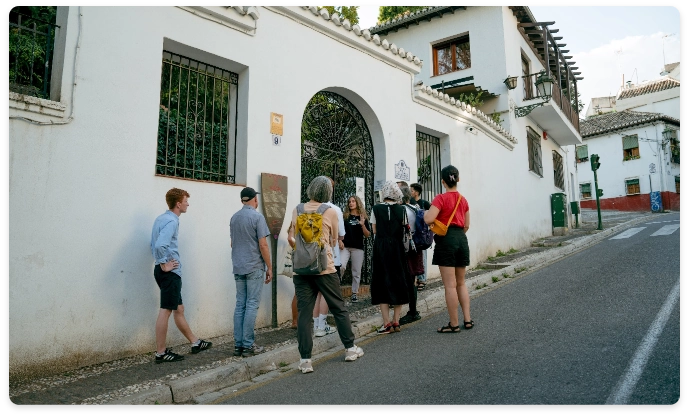
Sustainable Tourism in Granada


At Delengua, we believe that learning Spanish also means getting to know and respecting the place where you study. As a small, independent school in the Albaicín, we are committed to supporting our local community and encouraging responsible tourism in Granada.
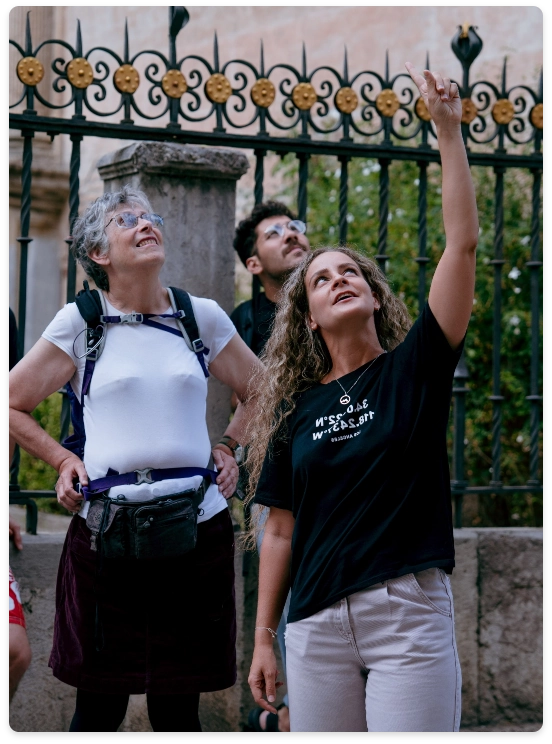
Our teachers are local and share their knowledge of the city’s history, culture and everyday life. Our activities go beyond the most famous sights, giving students opportunities to discover local traditions, crafts and neighbourhoods while using Spanish in real-life situations. We do not charge for organising these activities; students only pay any applicable entrance fees.
We also encourage students to support local shops, businesses and producers and to respect the historic neighbourhood where we are based. Delengua supports Integra2, helping young people and recently arrived migrants improve their Spanish through teaching materials and support.
We want our students to enjoy Granada while helping to protect its cultural heritage, local community and environment.